Coming soon from Quickdraw Books, my little imprint.
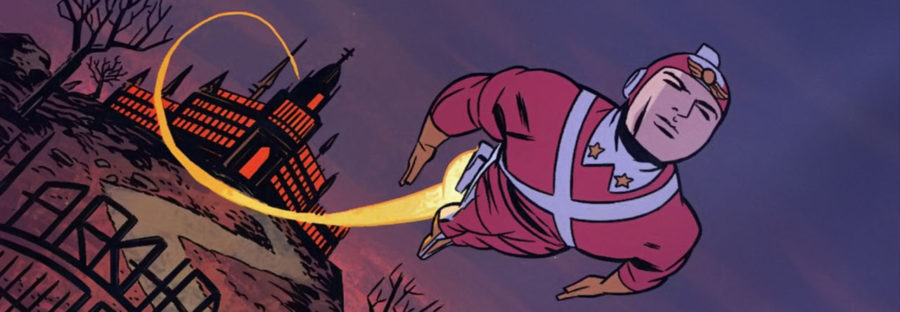
WARBIRDS OF MARS: STORIES OF THE FIGHT! is an anthology featuring some amazing talents. The book will debut at the Phoenix Comicon on May 23rd. Book is edited by myself and Scott P. Vaughn.
Here’s the description:
It’s 1948 and WWII never ended!
Instead, Earth was invaded by creatures from the stars! One small group of resistance fighters has banded together to hold the line…at all costs!
WARBIRDS OF MARS: STORIES OF THE FIGHT!
Bomber pilot Jack Paris. Lounge singer Josie Taylor. Bandaged avenger Hunter Noir. Mysterious hybrid Mr. Mask. Together they will stop at nothing to undermine the Martian occupation of Earth. From daring action in the South China Sea to explosive chaos on the frozen glaciers of Greenland. Watch a man transformed into a vigilante hero, as the world he knows crumbles around him. See an alien-human abomination discover self-worth in the death of a man who extends him kindness. What are the resistance plans for combating the Martian threat? Discover an awakening as two young boys journey from distant farms to the big city, to get in on the life of battle. Just what are the creeping monsters threatening the small southwestern town of Adobe Wells?
Scott P. Vaughn’s vision of a world ruled by three-eyed invaders from the popular webcomic comes to life in this anthology, with fourteen tales of intrigue, horror, and desperate action. The stories run the gamut from the air war, to the horseback of the wild west and the nocturnal alleys of battle-torn 1940s urban America. Brought to you by some of the best names in the horror, action & adventure, supernatural thriller, and comics genres. Relive the glory of the Pulp era with these stories of the fight.
At a whopping 470 pages, this bad boy will run 18.99, and should be available for your favorite online book dealers, as well as from brick & mortar shops (although they’ll probably have to order it for you, but just ask.)
E-book versions will be available in the next two weeks for 5.99.
.
The book features the writing talents of the following:
Sean Ellis
Ron Fortier
Kane Gilmour
Stephen M. Irwin
J. H. Ivanov
David Lindblad
Jeffrey J. Mariotte
Alex Ness
Chris Samson
Megan E. Vaughn
Scott P. Vaughn
.
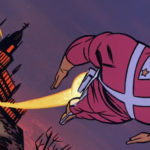
Each story in the anthology is accompanied by a full page illustration from the following:
I was going to start the series talking about inspiration versus distraction. Procrastination and how to avoid it. That sort of thing. Instead, I thought I should focus on how to begin. I get a lot of questions from people telling me they’ve started writing a book (fantastic! First hurdle accomplished—you started!), but they really don’t feel like they know what they are doing and they don’t even know what kind of font to use of how to format the manuscript. It’s this last bit that I’ve noticed creeping in again and again.
We get hung up on the details. “I can’t write book! I don’t even know what font to use.” Never mind that it’s your subconscious telling you “Damn, this book-writing thing is going to take a looooooooong time. Maybe I should find some reason not to do it.” Getting hung up on the details is easy to do.
Writing a novel takes time. And it’s not easy. If it was, then all the thousands (or maybe millions) of people who always say “Oh, I’ve got a terrific idea for a book,” would actually write it. But they don’t. Having an idea is pretty easy for some people. Typing for several hours a day for weeks and weeks? Not so easy. Even typing for a half hour a day every day in a year isn’t easy. You can type a book either way, but few people will ever do it.
For the time being in this series, I’m going to assume you have inspiration. You have ideas. You’ve already decided you want to write a book (or better yet, several books). But you are confused about how, or what comes next.
So let’s dispel some myths and get down to actual things you can do. First off, there are great books about how to format manuscripts. But every single one of them will tell you to do it differently. So how does that help? If you know you plan to submit your book to agents, and eventually to big publishers, it’s probably best to follow their rules. Start with buying Chuck Sambuchino’s book Formatting & Submitting Your Manuscript. Actual samples, and he explains what most agents and publishers will be looking for. Even still, once you find an agent, they might tell you to change things. Once you find a publisher, they’ll tell you to change things. Are you getting the idea how mostly unimportant formatting is until the book is about to go into production?
But that’s all if you want to go the old traditional route. The bulk of my advice in this column will be geared toward those looking to self-publish or “indie publish”. If you are confused about the difference, my definitions are simple: self publishers are authors that write a book, slap a cover on it, and release it as an e-book, probably just through Amazon. If they get out a print edition, chances are good it’s through Createspace, and it lists Createspace as the publisher. An indie-published book can still be from a single author, but they took the time to form their own publishing imprint, they paid for proper editing and have a professional looking cover and flawless formatting. In other words, a typical self-published book might look just like what it is. An indie book will be indistinguishable from a book published by a Traditional publisher in New York—unless you know what to look for.
So if you plan to put the book out yourself, here’s a helpful thing to know: you’ll need to format the novel at least four different ways when you are done. That’s right. Four. One for Kindle, one for Nook, one for Smashwords (which will spit the book out in an additional 8 or 9 ways), and one for print. You might even need an additional way for Kobo now. Not sure yet. So what to do? Where to start?
Ask a dozen self-published or indie-published authors and you might get that many answers. (Noticing a trend when it comes to formatting yet?) My preference is for the Kindle format. Keep it simple. In my opinion, the Kindle format is pretty simple, and I make more money off Amazon than I do from Nook or print or anything else, so for me, I want that format to go live first. Makes sense to write the book in that format.
But make no mistake: you can write the manuscript in any format and just get it ready for Kindle (and all the other delivery styles) later on. But for me, I try to keep the book in the right format as I go. Saves me a step later on. Here’s what I do.
1: Use Microsoft Word. The rest of this info is geared toward its use. If you want to use something else, you can, but Word is the standard.
2: Use the default page margins.
3. Familiarize yourself with the Show/Hide Formatting button, and learn what the formatting symbols look like. There are really only a few you’ll need to use, but you should know what the others look like for when you encounter them.
You’ll get a black dot for each time you hit the spacebar.
If you hit Ctrl and Shift and keep them depressed, while you hit the spacebar, you’ll get a non-breaking space, which looks like a little raised circle (like the symbol for degrees in temperature).
There’s a pilcrow for every time you hit enter—looks like two very tall, skinny capital letters T, joined at the top and with a big black ball lobbed onto the left side.
If you hit Shift while you hit enter, you get a Soft Return. Looks like a little black hooked arrow pointing left.
Finally, the tab key will give you a straight arrow pointing right. There are more, but these are the main ones with which you’ll need to deal.
4. Now that you know what a Tab looks like in the formatting view of Word? Don’t use it. Ever. When you want to indent a paragraph at the start, you go to Format Paragraph (different ways to get there depending on which version of Word you are using) and under Special, select First Line and a measurement of .3 inch. Ignore what you’ve heard about needing a full half inch indent on paragraphs. That was for print books—not e-books. If you’ve seen any e-books with a half inch indent, you’ll know how ludicrous it looks. For the first paragraph of a chapter (or of a new scene in a chapter where you have a break just before it) don’t indent the paragraph. You can, and I’ve seen it, and it looks fine, but you can not indent the first paragraph too. It looks fine, professional, and it’s one less step. Plus it visually sets that section aside for readers and subtly indicates to them: “Hey! New section here.” The nice thing about the setting is Word remembers it and applies it to every new paragraph for you, so you don’t have to set the first line indent all the time. Only on new chapters or new scenes within a chapter.
5. Speaking of new scenes within a chapter…how about those? I leave two pilcrows, each with a non-breaking space, between sections within a chapter. If you don’t include the non-breaking spaces, you can’t guarantee what Kindle will do with it. If you include the nonbreaking spaces, you’ll get the spacing you want. If you don’t know what I’m talking about here? I mean sections you’ve seen like this in books in the middle of a chapter:
Traditionally, publishers left a little break like that with some kind of symbols like the asterisks above, to indicate to the reader that the chapter is starting a new scene. Why would you do this? Mostly to introduce a new POV from a different character, or to show the passage of time. Why not use the asterisks or some other symbol? Not needed. What you see up there is three lines: two blank and one with the asterisks. Instead, just go with two lines (so hit enter for each) and put a non-breaking space on each (Ctrl and Shift while hitting spacebar). Another example in the next point.
5: For new scenes after the break? Bold the first few words of the new scene. You can, so why not? Looks nice:
You can be anal about it and make it always three words (which I do), but sometimes it’ll look nicer to bold more words than just the first three. Up to you how you do it, but be consistent throughout the whole book.
6: What about chapter heads? Be consistent and simple for the Kindle. Here’s an example of one of mine:
What is that actually? Two lines with a non-breaking space each, followed by the line with CHAPTER 1. Note that I made those letters caps the old fashioned way: by holding the shift key. For one thing, I disabled the bastard Caps Lock button on my keyboard (Google it). I now never accidentally hit it, which is nice. But the important thing to note is that if you use Word’s fancy Format Font technique to make the letters capitals, it will play hell with Kindle’s formatting engine. Don’t do it. Just learn to use the shift key.
Next, you’ll note another blank line. That’s again a non-breaking space and an Enter. Then the location line, because it’s a thriller and I use a lot of locations, so I throw in a location line. I make these bold. Again, not with the Format Font technique, but by using the keyboard command for it: select the line by clicking in the left margin next to the word Dorna, and hit Ctrl and the B key. Boom. Done. Then another non-breaking space on the next line, then I start the chapter.
Here’s what the same thing looks like with formatting marks:
See the pretty format marks? Learn to love them, and keep them visible as you type. Helps to prevent making mistakes that you’ll just have to correct later.
7: Then how do you end a chapter? Two ways. Either add a set number of lines with non-breaking spaces (like four) and then start the next chapter, or do like I do. Insert a page break at the end of the chapter. That way the next one starts at the top of the following page. Two schools of thought on which is better, but I like the breaks because I’m going to be using breaks in formatting the print edition anyway, and I can use a search and replace function to change all the Page Breaks into Next Section breaks for the print edition. Plus I like the look of the blank space you’ll get at the end of the section, and that the new chapter always starts at the top of a page. In Word, you select Insert > Break > Page Break.
8: Keep all your chapters in one Word file. Don’t mess around with a different file for each chapter. It’s a pain to slap it all together at the end, and invariably you’ll have different formatting at the end. One file, but make sure to back it up in a few places. I keep my files on my hard drive, on Dropbox, and on an external hard drive. I only ever work on the one on my computer, and then over-write the versions on Dropbox and the external. Come up with a system you like but back up to at least 3 places—and one of them should be remote. If my house ever catches on fire, my files are offsite on Dropbox at least.
9: Use Times New Roman 12. You can use other things, but older Kindles only handle a few fonts, so don’t get wacky. You’ll want single line spacing for your finished Kindle file, but while you are writing, you’ll find that a 1.5 line spacing will be more comfortable to read through. You’ll change the line spacing back to single when you format for release. Also, if you can afford one, a mouse with a fast scroll wheel, is really useful when working on long documents like a novel.
And that’s it for basic formatting. We’ll revisit formatting later in the series, when we talk about actually doing it for all the delivery systems, but for now, you have all you need to get started. And that’s the main thing. Get in the chair and bang out the first draft. It all gets easier from there.
This is going to be a series of posts. I see a lot of fellow new authors struggling with certain things, and I see myself struggle with them as well. I hear from unpublished authors frequently, asking questions about one thing or the other. There used to be books you could point an up-and-coming author to, and then there were blogs that were vital. Even taken holistically as a historical exercise, much of that information wasn’t filled with the specific: “Here’s how to do X” kind of information writers always want.
I know it used to irk the hell out of me when I would read about some author’s reply to simple “well, how do you do it” sort of questions, and their answers would always be along the lines of “It’s takes a lot of luck”, and “my path was unique to me”, and blah blah blah, but they never answered the question.
In this series of posts, I hope to answer some questions. As a whole, it’ll be a living and changing document, because by the time I post some of these ideas, I might have better ones, or the industry might change again. But still, my mission here is clear: to set out specific tasks that you can do, and show you how to do them. These things will make you a better author, make you a better marketer, and show you a step by step process for how you write your books, and independently publish (read: self-publish) them, while not sucking. Hopefully along the way, you’ll make some money doing it too.
What qualifies me to do it? Not much. I have a few books out with my name on them. They make some money (but not nearly enough). I don’t spend nearly enough time marketing or nearly enough time writing as I should. But I will have put out (or had published) four books in fourteen months. And I’m finding more and more authors with as many books out as I have or fewer turning to me for advice. I clearly don’t know everything, or I’d be retired and living like a king in Patagonia. But I must know a few things, because people keep asking me. I won’t tell you it takes luck (although that plays a part). I will tell you that you probably won’t follow my path exactly. (Who the hell wants an M.A. in linguistics just to write a YA fantasy novel?) But I will tell you exactly what I have done, what I do, and what I hope to do. I’ll tell you about some things you should be doing that I haven’t even done yet. I’ll try to keep it light, and funny, but unlike all those vague authors who say “my path isn’t for everyone”, I’ll give you concrete things you can do, and the sequence in which you should do them.
Over time, you can become an author, and a paid one at that. You might even make enough to live. You’ll build up an audience and a fan-base. You’ll form alliances with other authors, and you’ll learn how to manage your business. You’ll learn to treat your work like a business, the same way a small business owner like a corner grocer treats their business. You’ll learn that it really isn’t all about getting that first book written and published—it’s about getting the next one written and published. And the one after that.
I’ll point you to blogs by other people that you should read, and I’ll point you to books. I’ll tell you how to write a story and how to revise it. We’ll talk about editing and formatting, how to get the perfect book cover, how to deal with Amazon and Barnes & Noble, and all the other vendors out there. Social media strategies, and all the rest.
But we’ll start with something simple for this prologue blog post: get your ass in the chair. That’s how it all begins. You have an idea for a novel. “I’m going to write a book,” you say. Great. Sit down, shut up about it, and write it. Don’t worry about anything to do with anything while you are working on it. No publishing stuff or editors or agents or any of that stuff. Sit in the chair, every day (or stand if that’s your preference, and we’ll even talk about desk arrangements at some point), and write the story. Don’t worry about whether the story sucks. Just write it. Don’t worry about how long it’s supposed to be. Just type (or hand-write, or dictate. Whatever.) Just get the story from your head onto paper or screen somehow. That’s the first rule of building your e-book empire. Your print book empire too. You want to write? Write. That’s it. There’s no more secret than that one. I’ve taken ten years to write a novel and two weeks. Guess which is better.
This series is called Ass in the Chair because that’s the most important part. I’ll talk about where ideas come from, what to read for inspiration, how to deconstruct what you read and learn how an author did X in their book, and so forth. Here’s the secret to all that: you can implement all that stuff on your book after you write it. You are going to have to rewrite some things anyway. You’ll have to make fixes and changes. You might need to cut stuff. You might have to add three chapters once you finish. So? Don’t worry about all that, and instead focus on getting the story out of your head and onto the screen.
Until you do, you’re just wishing. Might as well wish to be an astronaut. Get the story down. We can talk about all the rest over the coming weeks. But you have to do the work. It’s the single reason that most people who say they want to write a book never do. They don’t put their ass in the chair and type it. I’ll tell you another little secret. Most of them “want to write a book someday”. That’s not what you should want. You should want to be an author. They don’t write a book someday. They write on a book every day. And they end up with more than one book. There’s a reason. It’s hard to make a living on one book. Stephen King isn’t a gajillionaire because he wrote Carrie. He wrote over 60 more books after that one (and he had completed several by the time Carrie was published). If you want to live as a paid author and build your e-book empire, you need to plan to write more than just one book. When you start thinking that way, your first book becomes an obstacle to overcome, and less of a baby to perfect and polish. Yes, it needs to be good, but don’t twiddle with it forever, or you won’t get Book Two done. Same story for Book Two. Get it done and move on to number three.
We’ll talk about how to make them good, and how to tend them once you release them into the wild. But first things first—make them exist.
THE NEXT BIG THING is a chain of book and author recommendations. One author tags a few others, who then each tag others. The idea is that we all help people out there learn about all the good stuff that’s just out or coming soon. David Wood tagged me on his blog and now it’s my turn.
1. What is the working title of your next book?
Actually, the title of my next book is THE CRYPT OF DRACULA. It’s a little novella I’m putting out before my next full length book. The idea came from some discussions with friends about what was missing from the modern vampire story, and how we fondly remembered older film versions of the vampire story that included strict rules on how the creatures could act and how they could be killed. I love those old films from the 1930s and 1960s and 1970s, so I thought I’d create my own little nostalgia creature mini genre to pay homage to those great stories.
In THE CRYPT OF DRACULA, the fiend is awoken and a new hero takes up the epic struggle against the sinister Count.
2. Where did the idea come from for the book?
I wanted to tell a simple nostalgic Dracula tale. I’m not reinventing the wheel with this one. Just including all the good stuff: creepy villagers, crumbling spooky castle, coffins, fangs, and blood, blood, blood.
3. What genre does your book fall under?
No idea. Horror? Adventure? Nostalgia? On Amazon it’ll go under Horror > Vampires and Action & Adventure.
4. What actors would you choose to play the part of your characters in a movie rendition?
Wow. Tough one. I can easily cast the characters for RESURRECT, my first thriller, but doing Crypt will be tough. For RES, I always pictured Jason Quinn as actor Jason London (as seen on the cover of 2000’s retched Jason and the Argonauts–title completely a coincidence, because I didn’t see the film until years after I had written most of RES), Curtis Johnson is a younger Val Kilmer, and Eva is Kate Bosworth with long curly hair.
For Crypt, I might cast Matt Damon as Andreas, Georgina Moffet (from Doctor Who’s The Doctor’s Daughter episode) as Anneli, and maybe someone young like Kevin Zegers as the Count.
5. What is the one-sentence synopsis of your book?
A stonemason and mountaineer takes a job restoring a castle in transylvania, but ends up having to rescue his wife from the resurrected vampire, Count Dracula.
6. Will your book be self-published or represented by an agency?
I’ll be putting the book out from my Quickdraw Books imprint. It will be in e-book and print.
7. How long did it take you to write the first draft of the manuscript?
Still working on it, but not long. A few weeks.
8. What other books would you compare this story to within your genre?
None, probably. It will be more akin to a Dracula film from the 60s or 70s than to any current horror books, and because I lean toward adventure, there will be plenty of hair-raising stunts and fights in the second half.
9. Who or what inspired you to write this book?
I miss the monster craze of my youth in the 1970s. I miss the creepy old castle and spooky fog-infested forests. Sparkly vampires are not my thing–probably because I’m not a teen or pre-teen girl. I like my vampires spooky and creepy. I started watching those old films and re-discovering what I had enjoyed about them in the first place (it mostly was not the acting). I got the idea to find some books that took a nostalgic approach to vampires and Frankenstein’s Creature and the rest of the great monsters and was surprised to not find many. I decided to get some novellas with these public domain characters out.
10. What else about the book might pique the reader’s interest?
The book starts very slowly, establishing the locale and the players, and introducing heaping mounds of foreshadowing. When it gets going, I hope it will evoke a love of the Dracula of old, while at the same time injecting some of the modern approach to action that we have come to love in modern cinema and thriller novels. If nothing else, I suspect that the hero’s ultimate weapon against the Count might be something we’ve never seen before.
As the title of this review implies, there are zero spoilers lurking in this review. And when I say ‘zero spoilers’, man, do I mean it. I take my James Bond seriously, so much so, that when I went up to Essex Junction last night (a 40 minute drive) to catch the 0:07 hrs showing of Skyfall, as I stood in the lobby of the cinema and they were showing previews on a huge flat screen TV over the concession stand, when they played one for Skyfall, I refused to let my eyes even glance at the screen.
Before going to see the film, I had seen only the first international trailer. I had seen none of the TV spots and none of the additional trailers. That was by design. I wanted no spoilers. I take them more seriously with Bond than with anything else.
Before I get to talking about the film, without actually talking about it, I want to mention the cinema. I went to a midnight showing, yes. But I might not have done so if it wasn’t for this particular cinema. Essex Cinemas has what they are calling a T-REX cinema. 400 seats of extra-wide, leather-clad, memory-foam, rocking goodness with the required drink holder built into the arms. A 60-foot curved screen with digital projection. 18 amplifiers and 124 speakers (typical cinema has around 1/3rd of those). This place was serious about their movies. As a special midnight showing, the auditorium was thankfully not packed. But then again, this is Vermont, where sidewalks roll up promptly at 6pm. I was able to grab a seat just about in the center of the terraced auditorium. Perfect. If that all doesn’t sound amazing, just remember the running time of the film is 2 hours 40 minutes. Then I had the 40-minute drive home to look forward to. That’s right. No sleep til 4am. So those features were worth the loss of sleep for me.
The ads were minimal. For International readers, many US cinemas have a brief slideshow of static ads followed by a few irritatingly repeated video ads before the previews. The static ads are shown repeatedly until the video starts. Once video begins, the ads run usually no more than about 10 minutes or so. By contrast for US readers, when I watched The Two Towers in a cinema in Dublin, the video ads ran for nearly 40 minutes before the previews began! The previews of coming films last night were instantly forgettable, so they must not have been anything too special. I think there were only two of them. Then the main attraction began.
The opening 5 seconds of the film (after the gun barrel scene, which is a given) lets you know you are watching a Bond film. How about that? It was simple, but clever. It set the tone for the pre-credits sequence, which unsurprisingly had a long chase scene in it. I always enjoy the pre-credits scenes in Bond films, and this one was a great example. In fact, it was so entertaining, and managed to pack in character development in the middle of all the action for not just Bond, but for many of the supporting characters, that I honestly felt at the end of it that I had watched a mini-Bond film. It was great. It had action, humor, character focus, and twists—even in those few minutes, that seemed unlike anything I had seen in a Bond film yet. I knew I was in for a true treat with this movie. It also seemed far longer than a typical Bond pre-credits sequence. I have no idea if it really was, but it felt that way. I wasn’t uncomfortable with the length of it—just impressed. The end of the scene was fabulous and bled seamlessly into the credits sequence.
Because I was avoiding the actual pre-release hoopla, I did not even hear the opening song by Adele before last night. I hadn’t heard any of her other music either. But I have to say that she performed a great Bond song with “Skyfall” and the quality of her voice in it was very reminiscent of Shirley Bassey for me. The song fit Bond perfectly (unlike some other clunkers over the years). It also fit the credits sequence perfectly (and not all of the songs do that either).
The credits sequence itself was marvelous. Most of them are, but this one especially was very well executed, with a thrilling bleed from the pre-credits sequence. All the hallmarks of every Bond film pre-credits sequence are here: guns and knives, silhouettes, women, Bond shooting, and so forth. There are also plenty of things connected to the pre-credits scene you just saw and the upcoming film as well. The video style was obviously a modern CGI at times, but at other times the look was so smooth that it made me recall the sequences from the late seventies and early eighties. Which is to say, the mix of old and new looks was very good and made this perhaps one of my favorite credit sequences.
Now we come to the film. I already mentioned it was long. However, I never felt it was too long at any time. The story moves nicely from scene to scene and nothing feels like it’s dragging—which is really impressive considering the raw number of slow scenes where the camera is simply zooming or lolling about in an establishing shot. The trick, you see, is what the best Bonds have always had—spectacle. The amazing on-location establishing shots were impressive because they were either locales we don’t see much of in film, or they were showing us aspects of locales or angles of locales we don’t normally see in other films. Very nice. Even the slow shots of Bond simply moving (and not at a run) from point A to point B, tended to show lots of visually dynamic spectacle in every scene, whether it be color, lights, or just arrangement on the sets. So yes, the long running time was well used. Even the slower scenes each had something to show you. Bond films are usually eye-candy in the sense of the cast and the action, but with this film, I really noticed and felt appreciative of the eye-candy of things like sets and costume. Even make up. Very impressive.
Acting was incredibly good from nearly all concerned. I felt one supporting actress’s performance was a bit stiff. But even that seemingly insignificant detail I learned by the end, was part of a great design. The main cast were all very good. We see Craig give us more of Bond in this film than we saw in the last two. Far more range. All very well executed. The villain is engaging and really eats up the screen when he’s on it. On some level you feel he’s saying “I’m a Bond Villain! See me be over the top!” but on the other hand, he’s so blisteringly good at being over the top, that you are loving every second of it, and finding it quite believable that a man such as he would be that far gone. I was fascinated by the choices of actress for the different female parts in this film. Yes, sure, beautiful Bond girls. But also atypical types of beauty. For example, one woman has so much makeup on her face that the makeup is practically a character. It’s Kabuki-esque, and the effect, clearly intentional, is to make her less attractive. It works very well for the scene and the character. By contrast, another actress is very plain with regards to make-up. Again, intentional and works very well.
Next, we come to the plot. Does it work on a broad range? Yes. It’s complex within a framework of a simple story. It has enough elements and twists to last through the film’s running time. Motivations for each character are believable, even if the resources are not always—but that’s the essence of Bond: making the unfathomable seem possible. The story goes to many places you simply won’t be expecting. Once those things happen though, you realize how very right they were, and how utterly perfect they were for both the film and the franchise. I was just as pleased with the end scene as I was with the beginning.
The tone of the film is also dead on. I say that with considered care too. Many Bond films in the past devolved into ridiculous festivals of corny and cliché one-liners. Skyfall doesn’t fall victim to that approach. There are many humorous lines and scenes, but they all arise naturally from the story, and are funnier for that fact. There’s a particular line Bond gives that made me think of the one-liners of old, but it isn’t a groaner, and really, neither is it terrible funny. In keeping with Craig’s general performance of Bond, the line comes out more acerbically and impatiently than you might expect. That’s good writing. Besides the humor aspect, the range of emotions is all over the place, and we see a lot of range from most of the cast.
Overall, I would say this film has been instantly catapulted to a tie for me with Casino Royale as to which is my favorite Bond film. That’s saying something. I’ve seen all 23 (and 25 if you count the original Casino and the film that shall Never be named). I saw my first Bond picture in a cinema in Lahore, Pakistan in 1980. I was nine years old and Live and Let Die was nearly that old, but I got the sense it was being first-run in Pakistan. I loved it. As a pre-teen, my favorite Bond was Roger Moore. As a college kid, it was Sean Connery. When Timothy Dalton was Bond, I watched both films in the cinema and thought he was the best Bond ever. In retrospect, I changed my mind, but at the time, he was the best. When Pierce Brosnan finally got his turn, I thought he was fabulous in Goldeneye. He became a little clownish by the end of his run, but I enjoyed him. I’ll even throw George Lazenby a bone and say that there have been times when I have wondered what could have been, if he’d had more time (‘all the time in the world’ was clearly not enough).
When Daniel Craig was cast as James Bond, I had severe misgivings. I didn’t think he could act the part, and I was sure he didn’t look the part. When Casino Royale was released, I was stunned that the producers and director didn’t even have him dye his hair (Bond’s hair is black in the novels). But could he act the part? Oh yes. I think we all saw that with Casino. That film reassured us that Bond was still relevant in the 21st century and that an excellent Bond picture could still be made. It’s a shame that Quantum of Stinkitude was so terrible. But Skyfall redeems the actor, the creators, and the entire franchise in one go. Was it an all-around excellent cinematic experience? Yes, it was. Who is the best Bond? Everyone has their own answers for that. I like them all, but Craig is my current favorite. Which is the best Bond picture? For me, this one is right up there at the top. Is this film worth going to see at the cinema? Absolutely, and more so if you are a Bond fan. If you are a Bond fan, I make my way to the cinema, pronto.
No, not the actual Norse End Times, but the new novel from Jeremy Robinson and Kane Gilmour. The book is available in all formats, from all places, today. If you step into your local bookshop and don’t find one, get on their case and have them order it for you.
Here’s the description:
It starts with a thunderous crack and a flash of light. Screams come next. Then the hunters. With a staccato flicker, the light disappears and everything within a hundred yard radius goes with it. A massive crater is all that remains where a chunk of the world has gone missing.
As the deadly phenomenon repeats and expands amidst the world’s most densely populated cities–carving apartment buildings in half, scooping away entire city blocks, and claiming thousands of lives–Jack Sigler, Callsign: King, and his black ops team take action. But the team is broken, spread across the globe and vulnerable. Scrambling to make sense of the violent disappearances and fighting to reunite, the team comes face-to-face with an otherworldly enemy capable of making the fearless…terrified.
Taking the battle to the ends of the Earth–and beyond–the team combats a savage enemy whose centuries-old plan for mankind has nearly reached fruition. If they fail, the planet will become little more than a fully stocked food cache for a creature whose presence heralds the beginning of Ragnarök–and the extinction of the human race.
Pretty great, right?
So who the heck is Jack Sigler and what’s this team? Jack Sigler is a Black Ops specialist with a team known as Chess Team (each member has a callsign related to a chess theme: King, Queen, etc.). Their handler is named Deep Blue (also a chess reference). The team started out as a normal military fighting unit, but quickly found themselves engaged in bizarre threats such as battling a bio-tech company-resurrected Greek Hydra, finding a cure for a weaponized strain of a genetic disease linked to a previously unknown race of neanderthals, and stopping a madman with an ancient language that could animate inanimate objects into engines of destruction. From werewolves to elephant graveyards, and from ghost cities to genetically enhanced giant salamanders, Chess Team always finds these threats and eliminates them.
Here’s the trailer for the new book:
How about it, huh?
Is this book part of a series? Yes. Could you jump into the series right here and follow along? Probably. Is it worth going back and reading the earlier books in the series? Hell yes. These books are all a wild ride. For those looking for reading order, I present the following list:
Confused yet? What’s the deal with all those CALLSIGN books? After three novels (PULSE, INSTINCT, and THRESHOLD), Jeremy knew he had too much on his plate for 2011, and it would be a while before he got back to Chess Team. So he joined forces with several top-notch thriller authors and got each of them to put together a novella (a short novel ranging from 30,000 words to 60,000 words in length). Each novella would tell a story about one of the team members. King has three novellas though. His story lent itself to a small trilogy, which can also be purchased as an omnibus. CALLSIGN: KING THE BRAINSTORM TRILOGY, collects all three King stories. Also, he’s the team’s field leader, and the star of the show. Only right he should have more novellas than everyone else.
You’ll also notice a little novella in there called CALLSIGN: DEEP BLUE. I co-wrote that one with Jeremy. It follows the team’s handler when he gets trapped in the team’s new underground headquarters in the White Mountains of New Hampshire, stuck between an armed enemy force and creatures that had been lying quietly in the bowels of the fortress, but who are now coming out of their dark holes. And they’re hungry.
So. How much of RAGNAROK is really tied to all the previous stuff? If you read PULSE, INSTINCT, and THRESHOLD, can you really just skip all the novellas and dive right into RAGNAROK? Well, you could…but I wouldn’t.
The KING novellas introduce a new villain to the franchise, and we see a bit more of a supporting cast character in the series who sometimes acts in his own interest. If you liked that character in the first three novels, you’ll want to see more of him in the novellas. He doesn’t make an appearance in RAGNAROK (although he does make his presence felt), but he will be showing up in a starring role in the next full-length novel in the series.
In the end of THRESHOLD, Rook is separated from the rest of the team. In the CALLSIGN: QUEEN novella, Queen goes looking for Rook. Along the way she finds danger and a new villain (who we’ll probably see more of in the future), in the unlikely locale of Pripyat–the radioactive ghost town on the edge of the Chernobyl nuclear power plant. If you didn’t read this one, you wouldn’t understand how or why Queen shows up where she does in RAGNAROK.
In CALLSIGN: ROOK, Rook stumbles across a strange lab in a remote wilderness…and that lab becomes a major setting in RAGNAROK.
In CALLSIGN: BISHOP, Bishop goes back to his ancestral homeland to meet his birth parents, and you’ll see him deal with life after the loss of previous abilities. Bullets fly as a result.
In CALLSIGN: KNIGHT, Knight gets called in to deal with a genetic experiment gone wrong in one of China’s massive ghost cities–giant towns of glass and concrete built in anticipation of people eventually moving there. But no one has come. Well, someone has, and it might mean the death of everyone in China. Plus, the return of a minor (but very popular) character who hadn’t been seen since the end of PULSE.
In CALLSIGN: DEEP BLUE, we expanded the support team for the field operatives with several new characters, we mapped out the headquarters (and yes, blew some of it up as well), and the aforementioned minor character from PULSE that made a reappearance in CALLSIGN: KNIGHT moves into a major role. Many of the supporting characters get significant air time in RAGNAROK, and you’ll want to know who they are. Plus, a chance to see Deep Blue in action on his own against armed intruders and giant mutated creatures? How can you go wrong?
RAGNAROK is certainly not the end of everything, but the book wraps up several loose ends in the series and brings the scattered team members back together again. But after facing what awaits them in this book, will they ever be the same?
I met award-winning author, Stephen M. Irwin, the old-fashioned way—through strange happenstance. I randomly picked up his first novel, THE DEAD PATH, off the shelf at Barnes & Noble and set it on my bookshelf at home until it insistently called to me and refused to stop calling. Once I got started reading it, I found myself rationing it, not wanting it to end too quickly, and savoring every taste like a fine meal or a swallow of incredible single malt. Before I even finished reading the book, I got in touch with the author on Facebook and haven’t stopped badgering him since. Usually to create more, more, more. We’ve become pals through a shared love of film and fiction, despite living on opposite sides of the planet.
His second supernatural thriller, THE BROKEN ONES, was just released in the U.S. this past week. Number 1 New York Times Bestselling author Lincoln Child says Irwin has a “truly unique and harrowing vision” and Booklist says he “offers cinematic descriptions [with] smoothly incorporated supernatural elements”.
The book description reads as follows:
What happens when every single person is haunted by a ghost only they can see?
Without warning, a boy in the middle of a city intersection sends Detective Oscar Mariani’s car careening into a busy sidewalk. The scene is bedlam as every person becomes visited by something no one else can see. We are all haunted. Usually, the apparition is someone known: a lost relative, a lover, an enemy. But not always. For Oscar Mariani, the only secret that matters is the unknown ghost who now shares his every waking moment . . . and why.
The worldwide aftershock of what becomes known as “Gray Wednesday” is immediate and catastrophic, leaving governments barely functioning and economies devastated . . . but some things don’t change. When Detective Mariani discovers the grisly remains of an anonymous murder victim in the city sewage system, his investigation will pit him against a corrupt police department and a murky cabal conspiring for power in the new world order.
I’ve raved about Irwin’s first book, THE DEAD PATH, in a previous post. I rate it highly and believe it instantly moved Irwin to the top of the class with the latest crop of stunning supernatural writing talent: Joe Hill, Justin Cronin, and Michael Koryta.
Irwin took some time to chat with me about his writing, his various projects, and his love of story.
_______________
Kane Gilmour: Thanks for taking the time to chat, Steve. Your new book, THE BROKEN ONES, is out now. Tell us a little about it, what drove you to tell this particular story, and what your process for writing it was like.
Stephen M. Irwin: A reviewer had said about my first book, THE DEAD PATH, that it was ‘crime noir’. That really stuck in my head; I loved the description. So, when it came to thinking what my second book should be, I figured: why not crime? I’ve long been a fan of the great crime and detective novelists – Chandler, MacDonald, Cruz Smith – and wondered if I could mix up a detective procedural with a ghost story. The ingredients came together when I had a random thought about what it might be like if everyone on earth was haunted – what would that do to the sanity of the population? To economies? To crime? That ‘what if’ question, coupled with my desire to write a police thriller-cum-ghost story, resulted in THE BROKEN ONES.
KG: You’re a huge fan of short stories, and you’ve written several yourself. Can you tell us how many you’ve written and what your plans are for collecting them into a single-author anthology? Are you bound by your publisher contracts to publish with them or would you consider putting the anthology out yourself?
SMI: I think I consumed a few truckloads of short stories when I was a teenager, mostly works by Bradbury and Lovecraft and King and Carver. I am a huge fan of the form – there is something honest about a story that says: I only need three hundred words to be told, or three thousand; not one hundred thousand words because that’s what readers expect a retail novel to be. I’ve written a few dozen short stories; some of them were ‘learning billets’ that never really worked, but as I improved, some of them got published and won some competitions, which really gave me the encouragement to write my first novel. My publishers have been brilliant and I like to share with them the opportunities to look at the new things I create, but at this stage the notion of an anthology of short stories hasn’t been raised. I’d love to find six months to tweak some of my first-draft short stories and to put to paper some story ideas that I know will be shorts, but my writing commitments seem to be stretching a ways into the future yet. I hope 2013 will be a year when I can find the time to returning to the short story form, and to poetry, not necessarily with a view to publishing, but because some stories can simply only fit into short form, and I’d like to get them out!
KG: As a follow on to the last, what are your overall feelings on the new wave of Self-Publishing and Indie Publishing? Any plans to put something out yourself at some point?
SMI: The idea of self-publishing intrigues and terrifies me. I have been so fortunate with my relationships with the publishing houses I’ve worked with – my publishers and editors have enriched my work and ideas in countless ways. They also contributed some fantastic cover art, marketing, and distribution. To try and do all that myself would be daunting – I have enough trouble finding the time to write and answer the odd email, let alone create an entire self-promotion machine. In short, I place huge value on my relationships with my publishers and editors, and would feel entirely at sea without them.
KG: As a big fan of short stories and supernatural thriller and horror fiction, have you read Joe Hill’s collection, 20th CENTURY GHOSTS, or any of Simon Kurt Unsworth’s great collections? Who are your favorites for short stories in the genre and why?
SMI: One of my favourite short stories from the last decade is ‘Pop Art’ from 20th CENTURY GHOSTS. Joe Hill is witty, adept, and highly imaginative. Some of it might be genetic, but I think he’s just a hard-working and disciplined wordsmith who knows his onions. I haven’t read any of Simon Kurt Unsworth’s works, and now feel a bit like hiding in a cupboard (I will jump onto Amazon now and buy, buy, buy!). I remain a big fan of the short works by masters like Raymond Carver, Graham Greene, and Shirley Jackson, but recent favourites include DARK ROOTS by (fellow Australian) Cate Kennedy and FRAGILE THINGS: SHORT FICTIONS AND WONDERS by Neil Gaiman. Kennedy’s works are grounded in contemporary truths, and I recognise fundamentally the images she creates; Gaiman’s stories are much more various in tone and content, and always surprise. I think that’s what makes a great short story: you are able to ‘plug into’ it quickly and seamlessly, and it takes you somewhere you didn’t expect to go. Perhaps my favourite collection of contemporary short stories is THE PACIFIC AND OTHER STORIES by Mark Helprin. The mark of a great book is that you will return to it again and again; I’ve read ‘The Pacific’ at least a half dozen times.
KG: There’s a listing on Amazon for THE DARKENING. Is that an alternate title for THE DEAD PATH? If so, why the title change?
SMI: That decision was taken by Sphere, who published the book in the UK. I honestly couldn’t tell you why they wanted to do it, but I deferred to what I hoped was their better judgment.
KG: As an author who prepared for writing across genres by creating a few still top-secret pen-names, I’m fascinated by this sort of thing: What’s the ‘M’ stand for, and why use the initial? You’re the only Stephen Irwin that shows up on Amazon. Distinguishing yourself from the late Crocodile Hunter? Did you give a lot of thought to your author name, or just natuarlly go with what you use?
SMI: M is, boringly, for Mark (my middle name). I could change it to something more intriguing by deed poll (Meringue? Murder? Mood-ring?) but I think I have better things to spend my cash on. The inclusion was, as you rightly suggest, to ensure people don’t mix me up with the late and much-missed croc man. I must say, his name is still well recognised and has its benefits to me: before his fame, I used to have to spell out my surname to people who would instead default to Urwin or Irvine or Erwing; now I just say ‘Like the Crocodile Hunter’. Did it take much thought to include the ‘M’ in my author name? About twelve seconds. I think (and hope) readers care about the work, not the author name.
KG: You are also an actor and screenwriter. What are some of your acting credits? How about your most famous screenwriting credits?
SMI: I used to want to be an actor quite a lot. I was fortunate enough to do some study at the American Academy of Dramatic Art in New York many moons ago, but I never quite had enough drive to pursue acting and acting alone – I got too caught up in other aspects of filmmaking, particularly directing and writing. Nevertheless, I’ve kept my hand in to a small extent, with roles in television commercials and small TV speaking parts in drama series (including a tiny role in a US series some years ago called ‘The Starter Wife’) because I think its much easier to write dialogue if you know with some first-hand experience whether or not it can be spoken by an actor. Regarding screenwriting credits, I am a prolifically unproduced writer; I’ve been paid to write a lot of television episodes and feature films, but they are all in pre-production orbit (or limbo!); I’ve certainly had some documentaries televised and some short films produced (look for ‘Ascension’ on Youtube). But this year I am writing three feature films, and it is looking very good that the first – a romantic comedy of all things! – will be in production in December.
KG: You are working on a number of screenwriting projects right now. One of them struck me as something that fans of your supernatural thrillers might want to pounce on: Night Fare. What can you tell us about this project and when can we expect to see it?
SMI: It is a great fun series in the vein of ‘Kolchak: The Night Stalker’ but with a more robust ‘Last Boy Scout’ energy and irreverence. I can’t tell you much, since the project is currently being developed by the Emmy Award winning cleveries at Hoodlum (who have made a lot of online material for shows like ‘Spooks’, ‘Lost’, and ‘Flash Forward’. I believe it is being marketed to networks in the US as I write this, so fingers crossed I might have some news about production in 2013.
KG: You’ve also got Australian film company, Hoodlum, interested in doing a mini-series of your first novel, THE DEAD PATH. Can you tell us about this project?
SMI: It’s very exciting that Hoodlum have optioned my first novel. This is only a recent development, so I’m not sure yet who might be doing the screen adaptation, or how many parts the work will be. I’m very curious to see what transpires myself – I’ll keep you posted!
KG: Any trunk novels lying around or novels out under any pseudonyms?
SMI: I have a draft supernatural thriller that was almost working for me, and after I finished it I realised I had to change the gender of the protagonist. It is a great story, set in the Antarctic, and I’m at the pleasurable place where I now need to decide if I’m going to do the rewrite as a novel or a feature film.
KG: You are working on your third novel now, is it too early to tell what the project is about or what you are calling it? When will we see it?
SMI: The working title is THE SLEEP, and it’s pretty epic in scale and scope. I can’t really tell you much more, except that it is a bit more of an ensemble piece than my last two novels – if you’re a Stephen King fan, think THE STAND. Big and sweeping and a whole lot of dangerous fun.
KG: Tell us a little about your office and what your writing day looks like. Do you have a routine? Goals for the day? Do you do all your writing on that Macbook Pro you mention on your website?
SMI: I do love my Macbook. I am not an Apple zealot (they do some things that frustrate me!) but I like the machine’s robustness. In the home office, I plug it into a 24” monitor mounted on a standing desk, and that’s where I work. Standing helps my posture (he said, waving his walking stick – ya listenin’, sonny?) and offsets the migraines that I’ve had all my life. I have my fun things in my office – a nice big blueprint schematic of a Supermarine Spitfire, a collection of old stills cameras, my dad’s binoculars, and of course a heavily laden bookshelf. I have a big magnetic whiteboard to which I attach index cards with fridge magnets when I’m plotting. Routine? I have two young kids. I write when I don’t have to look after them! Goals? Well, I like deadlines. Without them, I’d mooch about looking at Triumph motorcycle websites. The goal is, write as much as possible to avoid embarrassment.
KG: Finally, will you be doing a book tour for THE BROKEN ONES? If so, will it bring you to North America?
SMI: Man, I wish I was coming to the US for THE BROKEN ONES. Doubleday are the publisher and they’ve been amazing – and it is great to see the book is now with the Book of the Month Club. But a book tour is a big and expensive exercise for publisher and author, and I think once my readers in the US grow, that might be an option. But right now, the crocodile hunter is still the most famous Steve Irwin. But I’m working on it!
Thanks for taking the time to talk with us, Steve.
_______________
Been a while since I update the site. Figured I’d start off with a review of a spectacular book, THE DEAD PATH, by my Australian friend, Stephen M. Irwin. Read on.
Stephen M. Irwin’s supernatural thriller debut, THE DEAD PATH, is without a doubt one of the finest things to come out of Australia in the last twenty years. With a slow, considered burn of a beginning, the story twists a few times before it really gets rolling, and you think you are in for a predictable The Sixth Sense kind of “I See Ghosts” tale. But Irwin has loftier things in store for you. The story moves effortlessly into different territories than where you thought you were heading, and it sucks you in so deeply, that when it returns to issues brought up in the early part of the tale, you had completely forgotten about them, and the resulting impact is just what a terrific spookathon requires. The tale twists and turns, moving in directions you don’t see coming until they are upon you. And by that point, the new direction is so wonderfully obvious, you question why you didn’t see it coming in the first place. Because you are in the hands of a master, that’s why.
This novel was also a surprise for me in another way, unrelated to the excellent tapestry of woven plot. The prose is lush, exotic, and so concise, that Irwin can evoke the heebie jeebies as easily as he evokes your misspent childhood with a simple sentence about the weather. I found, for the first time in 15 years, I was savoring the prose of a novel, dipping into it like a fine single malt whisky, letting each sentence roll over my tongue, and feeling the delicious burn of each chapter. I found myself going back and re-reading a sentence to marvel at its construction—at how perfect it was, and yet how simple. Like any master of a craft, Irwin makes it look easy. I made the first third of the book last weeks, because I refused to barrel through it at the pace the plot demanded. I wanted it to last. I hadn’t done that with a book since I read John Banville’s lavish espionage drama, THE UNTOUCHABLE, over a decade ago. There’s a reason why, like Banville, Irwin is an award-winning author. He’s just that good. After my fine sips began to come one after the next, with a delicious warm intensity, I started gulping, until I finished the book in a staggering bender of intoxicated reading.
We are living through a new renaissance of supernatural horror thriller fiction at the moment. Stephen M. Irwin is joining the ranks of the other new maestros: Joe Hill, Michael Koryta, and Justin Cronin. As the illustrious Stephen King spends more time tinkering with his magnum opus and knocking baseball novellas out of the park, these four authors are forging ahead with the genre, taking us places we’ve never been, but where we have been yearning to go. Any one of these authors could carry the legacy of Stephen King, with the fine chilling tales to which we have become accustomed. With Irwin’s addition to the new spookmaster’s club, readers of the genre are in fine hands.
The book was actually released in the Fall of 2010. I snatched it off the shelf and it took me a while to get around to reading it, but I really loved it. Steve and I have become pals through Facebook since. His new supernatural thriller, THE BROKEN ONES, just came out. You’ll want to go grab that one too.
Holy Hannah! Four months have gone by since I last posted here on the blog. In my defense, a lot has happened. First, my daughter, Moira Dawn Gilmour, was born on January 11th, and against my will, I delivered her. Well, I was pretty happy about it, but I had delivered my son in 2004, and I was supposed to be taking care of him while our awesome midwife handled things upstairs, but things went far too quickly and she didn’t make it to the house on time. Oh well. Didn’t drop this one either so I’m two for two. Mother and daughter are both doing fine.
RESURRECT is Out!
RESURRECT has been doing well with e-book sales, and I’ve even had some print sales too. The book has received some great blurbs from fellow authors and some great reviews—about half of them from people I don’t know, so that’s alright. E. Bard did a great review of the book on the ThrillReads and Reviews blog and it also appeared on the Thrillers Rock Twitter blog. The amazing Kent Holloway, publisher and author of THE DJINN, also performed a lengthy interview with me on his blog. Thanks Kent!
Hardcover
I’ve had some requests for a hardcover edition of RESURRECT, and naturally, I’d like my own copy as well. I’m going to try to put one together, and I’ll announce it here when it’s ready. It will likely have a few sample chapters from the next full-length Jason Quinn novel and an interview with yours truly. It might have a Jason Quinn short story too (depends if I can come up with a reasonable idea and if I can fit it into my suddenly busy writing schedule—more on that later). Reader Shannon Marshall suggested I include maps and diagrams—something I had always imagined for the book if I had it published by a New York publisher in hardcover. As it turns out, I probably wouldn’t have been able to get that done if I had gone through a traditional publisher anyway. I hope to implement Shannon’s suggestion too. If the experience goes well, I’ll be doing all my books in hardcover first.
CALLSIGN: DEEP BLUE is Out!
The novella I did with Jeremy Robinson for his Jack Sigler / Chess Team series, CALLSIGN: DEEP BLUE, is out and has been doing well. I’ve gotten some nice feedback on it, and I’m pleased to say that many of Jeremy’s readers picked up the book, and then picked up RESURRECT too. As it turned out, Deep Blue was the 7th Chesspocalypse novella, being released after CALLSIGN: KING – BOOK 2 – UNDERWORLD, co-authored with Sean Ellis. Edited by yours truly, UNDERWORLD was a great ride and if you haven’t sampled it yet, you should snag it. Which brings me to the next point.
CALLSIGN: KING – BOOK 3 – BLACKOUT is out!
The third KING book, CALLSIGN: KING – BOOK 3 – BLACKOUT again co-authored by Jeremy Robinson and Sean Ellis, passed my editing desk and is now out. The story is pretty great. I think taken together, all three KING books form a pretty fantastic tale. So be sure to pick it up for more blazing King action and adventure.
.
.
Warbirds of Mars Update
Along with the writing and editing I’ve been doing, I’m also writing the Warbirds of Mars web-comic, which was created by and is drawn by, my good pal Scott P. ‘Doc’ Vaughn. We’ve been getting some nice response regarding the series, about a Martian invasion of Earth in the latter years of WWII. Stop by and check out the story (and also the excellent ‘radio’ episode podcast that Doc did with some pals). Print versions of the web-comic can be nabbed at IndyPlanet and we’ve also got some pretty sweet Warbirds t-shirts at our swag link. Doc and I are also planning a prose anthology of Warbirds of Mars short stories. Right now, we’ve got some great folks that have agreed to write tales for us, but I won’t name any names until we see the stories. Suffice it to say, you’ll know many of the names. Doc is working on a Hunter Noir origin novella for the project, and I’ll be doing a story with Mr. Mask set in pre-war Japan. More info on this one later in the year.
.
.
NEW PULP EXPLOSION!
I was surprised and honored a month or so ago when an editor and writer at one of the companies putting out New Pulp content, contacted me to compliment my work on Warbirds and invite me to submit some prose stories. I have to admit that I really hadn’t known that for the last several years, there’s been a revival in the great old Pulp era stories, with many companies like Altus Press reprinting them, and other companies like Airship 27 producing all new stories featuring many of the characters from the Pulp days that have now fallen into public domain. But man, am I glad my attention was called to this New Pulp (as it’s being called) explosion. I very quickly found some great reprint books (Ki-Gor, the Purple Scar, and the Green Lama) and I’ve been snatching up the New Pulp stories also. I never read any of the reprints of Doc Savage or The Shadow growing up, but I knew friends that were into those characters. I had a working knowledge of the Pulp era and its connection to an era I know more intimately—that of comic books—but I had never really read any of the old stuff. I’m thrilled that this new landscape of publishing (with public domain and print on demand) has made it possible for those with a love of that era to reinvigorate it. If I can work it into my schedule, I hope to join in, and take that editor up on his offer. In the meanwhile, I’ll be reading up on all I can from the old and the new.
RAGNAROK!
So what’s up with my writing schedule being so crowded? It’s because I got an offer from the fabulous Jeremy Robinson to co-author the next full-length novel in his Jack Sigler / Chess Team series. The book is now formally titled RAGNAROK (a reference to the Norse mythological story of the end of the world). Unfortunately, Jeremy’s originally planned release date of the story has been pushed back until October 2012, but the wait will be worth it. The book will now be released by Seven Realms Publishing, and it will be available in bookstores, and wherever books are sold. It’s available for pre-order now at Amazon. This book is Book 4 in the series, coming after PULSE, INSTINCT, and THRESHOLD. The Chesspocalypse novellas all fall between THRESHOLD and RAGNAROK. The cover for RAGNAROK, by Jeremy, is a beautiful thing to behold. I expound upon the way the collaboration works in the interview with Kent, mentioned above. But Robinson fans should rest assured that the book will be full of the same kinds of action, adventure, and antics that the previous three books contained. Whereas Deep Blue was really my story with Jeremy tweaking it in places (to make it more Chess Team appropriate), RAGNAROK is more a case of me constructing the framework and Jeremy will have firm control over how it comes out. We’ve had a great time plotting the story and now the writing is underway. I’ll write up the first draft, and then Jeremy will edit and add description and dialogue as he sees fit. We are both pretty excited to bring you the next chapter in this series.
MONSTER KINGDOM and TROUBLE Update
The result of taking the offer to work on RAGNAROK though, is that my writing schedule has had to change. There’s an actual deadline for it if we want to have appropriate press and reviews in place before the book goes live in October. So it’s coming first. That has meant pushing poor TROUBLE back again (the concept is from 2006!) and also pushing back MONSTER KINGDOM, which I mentioned in the Kent interview as well. Once my part of RAGNAROK is off my plate, I’ll be turning my attention to getting MONSTER KINGDOM done, as well as completing the next full length Jason Quinn novel, FROZEN, which I’ve also already begun. MK dates back to November 2010, when I was going to write it for a NaNoWriMo book. Unfortunately, between freelance work, family stuff, and the push to get RESURRECT out there, MK has been pushed back and back. But this May, it gets finished. TROUBLE will have to wait for later in the year. (That MK art isn’t the final cover art yet, but it’s getting there.)
.
Appearance in Phoenix (of all places!)
I’ll be at the Phoenix Comicon from May 23 to May 27th. Doc and I will have a table to hawk our wares. You’ll find print copies of Warbirds of Mars, t-shirts, prints of Doc’s artwork, and signed copies of RESURRECT and CALLSIGN: DEEP BLUE for sale. If you’re in the Southwest, stop by and say hi.
2012 is going to be a great year, and if the world doesn’t end (stupid Mayans!) then it will certainly be on the brink of it in the fiction I’ll be bringing to legions of readers. Stick around. Great things are coming.
Winding down the series of Chesspocalypse micro-interviews, today I’ve got Stan Tremblay of Variance Publishing and FindTheAxis.com, the master of formatting on the Chesspocalypse books and other works by Jeremy Robinson (as well as on my own thriller, RESURRECT), and the inspiration for the mighty character of Rook, to talk to us about all the fingers he has in the pie of publishing.
_________________
Kane Gilmour: Thanks for interviewing me last time, Stan, and for taking the time to answer some questions for us. Let’s start with you and Jeremy Robinson. You are the inspiration for the character of Rook, in Jeremy’s Jack Sigler/Chess Team series. Can you tell us about the origins of your association with Jeremy and about what it feels like to be the linguistically colorful soldier in a bestselling thriller series?
Stan Tremblay: Not a problem—it was a blast! I love interviewing people actually; it’s interesting to find out where they are from and where they intend to go.
I’ve known Jeremy for quite some time now, nearly 20 years actually. The brother-in-law and I are three-weeks apart in age, so when Jeremy and his wife got together we just naturally bonded. A lot of it was over computer games like Diablo, or NHL 92-93 for the SEGA, but I also looked up to him because he was such a great artist and I always loved art of all types. We’ve been close ever since. As to what it feels like, it’s very…surreal. I never thought being me was fantastical enough to be a character in a book. Sure, some of what you read is embellished, but for the most part, the speech and mannerisms are me to a ‘t’. It’s actually quite fun to see me from a different perspective.
Kane Gilmour: Lately, you’ve become the “Go To” guy for formatting in the Chess Team universe, freeing up some of Jeremy’s time for more writing. Can you tell us about what goes into the formatting process, and how much feedback you end up supplying Jeremy on the content?
Stan Tremblay: Well, most everything was already set up for me since he did the first few novellas himself, I just followed it like a template. I do have to say though, Jeremy has put a lot of time and effort into branding and setting himself up for the long-term. Beyond the standard links for Table of Contents, he puts in a bunch for his other titles so that they can be bought quite easily through Amazon and Barnes & Noble direct to your device. For other books though, like INSOMNIA and TORMENT, he gave me a general idea of what he was looking for and I did up what I thought his vision was through my design skills. I send it over to him and begin designing the rest when it passed his inspection. We’ve always worked well together and have a similar vision for what we want to see in an end result: Success.
Kane Gilmour: Through FindTheAxis.com, you are available for freelance for cover design, art direction, print and e-book formatting, and even website design. How does one man fit so much awesome on his daily plate? What does your freelance day normally look like, and besides the obvious level of high quality, what features set you apart as a provider from others entering these kind of Indie-publisher support areas?
Stan Tremblay: Ha, good question. I have a big plate! Actually, I learned it from the master himself, Jeremy. He took me under his wing and taught me much of what I know today. I’ve picked up my own way of doing things and superstitious habits (like goalies rocking back and forth while hitting the uprights from left to right 3 times each) that have made my way ‘me’, but the building blocks were set in place with his guidance. Just like in anything to do with publishing, you have to be broad in what you know to be able to compete in today’s market. Being a one-stop-shop with competitive pricing is a must until you get so busy that you allow yourself to pick and choose your clients. I’ve been a jack-of-all-trades my whole life—from basic car repair to some plumbing and electrical to computers to quality control and flavor profiling, to now: the many facets of pre-production publishing. A typical day for me usually starts after dinner until I feel as though I’ve accomplished what I was looking to do that night—anyplace from 10pm to midnight. If I run low on work, I’ll either work on honing my skills with some Photoshop fiddling, write up a blog post over at the FindTheAxis Blog, or just be social.
What sets me apart? I would say my drive for customer satisfaction. Sure, while the money helps to pay the bills, I strive to make the customer more than ‘happy’ with the end result. I like knowing when the customer is ooh-ing and aah-ing and takes pride in something I made that they can show off to the world. If you can’t say ‘look at my new cover that impresses me every time I see it’ then I’m not happy.
Kane Gilmour: You are also an integral part of Variance Publishing, where you serve as Assistant Publisher, Webmaster, and a cover designer. Which of your covers are you most proud of, and can you take us through your design process on it?
Stan Tremblay: I love designing covers. I don’t know if a picture is worth a thousand words, but conveying a concise message in that small space is a challenge I embrace with open arms! While it was created to mimic the first book in the series, I love the cover for THE MONGOL OBJECTIVE, by David Sakmyster, along with DARK TRINITY: ASCENDANT, by Sean Ellis. I have to say though, I get many comments on a few of my non-Variance titles—namely Rick Chesler’s kiDNApped, Katie McVay’s THE CITY OF LOST SECRETS, and GHOSTS OF ARLINGTON by D.G. Gass. (Sorry, my covers are like Lay’s potato chips, I can’t pick just one.)
My first question before designing any cover is, ‘does this belong to a series?’ This way if it’s a follow-up, I can see what past titles might have looked like to try and mimic them for author-branding purposes, or if it’s the first in the series and I’m not the one in the future to do the follow-up books, that it can be created so fans who see the next books will associate right away with that author for an instant sale.
My next question is, ‘what ideas would you like to see on the cover (places, buildings, feelings, etc)’, along with any cover you would like to mimic (an action book along the lines of James Rollins and his Sigma series, as an example).
From there I start looking for stock photos I can meld together to make an image worthy of a bestseller. Font choices are always running through my head as well, something easy to read, but stylish is important! Don’t get caught up in the ‘gimmicky’ fonts.
Lastly, once I’ve created a sample, it goes to the author for them to review and suggest changes before they get the final hi-res copy. All-in-all, it can take up to a week to create a cover, but usually only a few days.
Kane Gilmour: I asked you about this when we met in November, but I’ll nudge again. If you have no plans to embark on writing your own novel, do you at least have ideas you’d like to see in print that might lead you to a collaboration with Jeremy or another author in the future?
Stan Tremblay: I still have no plans to write anything at this time. And while I have a sick and twisted imagination that could give Clive Barker a run for his money 20 years ago, no one has yet asked me to collaborate on anything. Jeremy has more ideas than you can shake a stick at, so he doesn’t need my help, though on occasion, he might run things by me and I’ll give my input. If you know of anyone looking for ideas and wants to talk, you know where to find me.